
Radiology
Radiology services are a key component of healthcare that involve the use of medical imaging technologies to diagnose and monitor diseases and conditions.
Radiology services available at M.G. Polyclinic include:
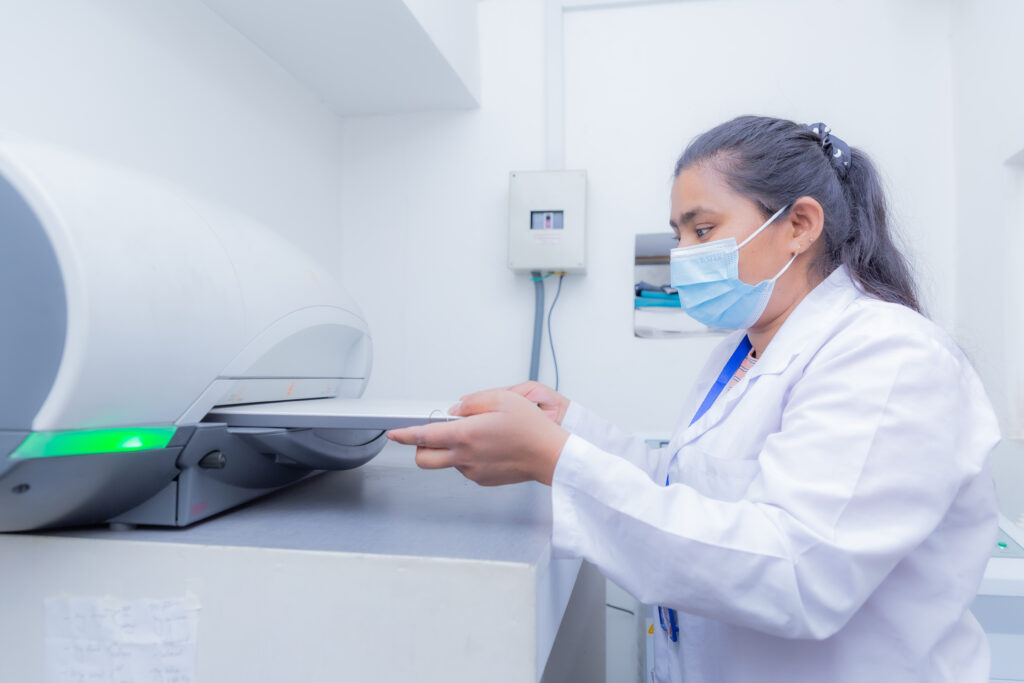
X-ray: This is a form of imaging that uses ionizing radiation to produce images of the body’s internal structures, such as bones and lungs. We have highly advanced CR (Computed Radiography) system for X-ray Imaging.
A CR (Computed Radiography) system is a type of digital imaging system used in radiology to produce digital images of X-rays. The system works by using a special cassette that contains a photostimulable phosphor plate. The X-ray is projected through the patient and onto the plate, which absorbs the X-ray energy.
After the X-ray is taken, the cassette is inserted into a CR reader, which uses a laser to scan the plate and release the stored energy as visible light. The light is then captured by a digital detector, which converts it into a digital image that can be viewed and manipulated on a computer.
Some of the key advantages of a CR system:
- Faster image acquisition: CR systems produce digital images that can be viewed and manipulated immediately after the X-ray is taken, allowing for faster diagnosis and treatment.
- Lower radiation dose: CR systems require a lower radiation dose than traditional film-based X-rays, reducing the risk of radiation exposure for patients.
- Improved image quality: CR systems can produce higher-quality images with better contrast and detail than traditional film-based X-rays.
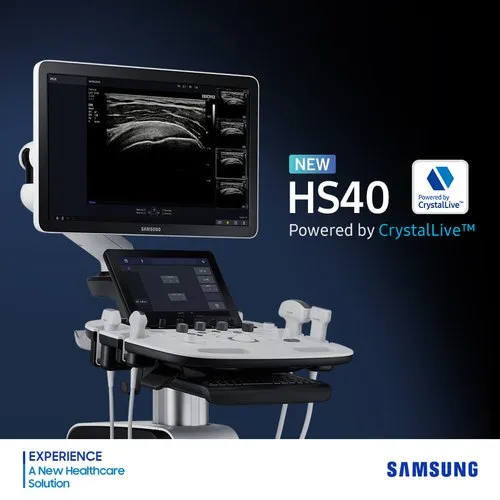
Ultrasound: This is a type of imaging that uses high-frequency sound waves to produce images of the body’s internal structures, such as the heart, liver, and kidneys. We have highly advanced Samsung HS40 USG system.
The Samsung HS40 is a diagnostic ultrasound system used for medical imaging purposes, is designed to provide high-quality images and advanced diagnostic capabilities for a wide range of medical applications. Some of the key features of the Samsung HS40 diagnostic ultrasound system include:
- Advanced image processing: The HS40 uses advanced image processing technology to produce clear and detailed images, allowing healthcare professionals to make accurate diagnoses.
- Multiple imaging modes: The HS40 offers multiple imaging modes, including B-mode, color Doppler, and spectral Doppler, to provide a comprehensive view of the area being imaged.
- Lightweight and compact design: The HS40 is designed to be lightweight and compact, making it easy to transport and use in a variety of medical settings.
- Intuitive user interface: The system features an intuitive user interface, making it easy for healthcare professionals to operate and adjust the settings as needed.
- Wide range of transducers: The HS40 supports a wide range of transducers, allowing healthcare professionals to use the system for a variety of medical applications.
Samsung HS40 diagnostic ultrasound system is a versatile and advanced imaging solution designed to provide high-quality diagnostic capabilities for a wide range of medical applications.
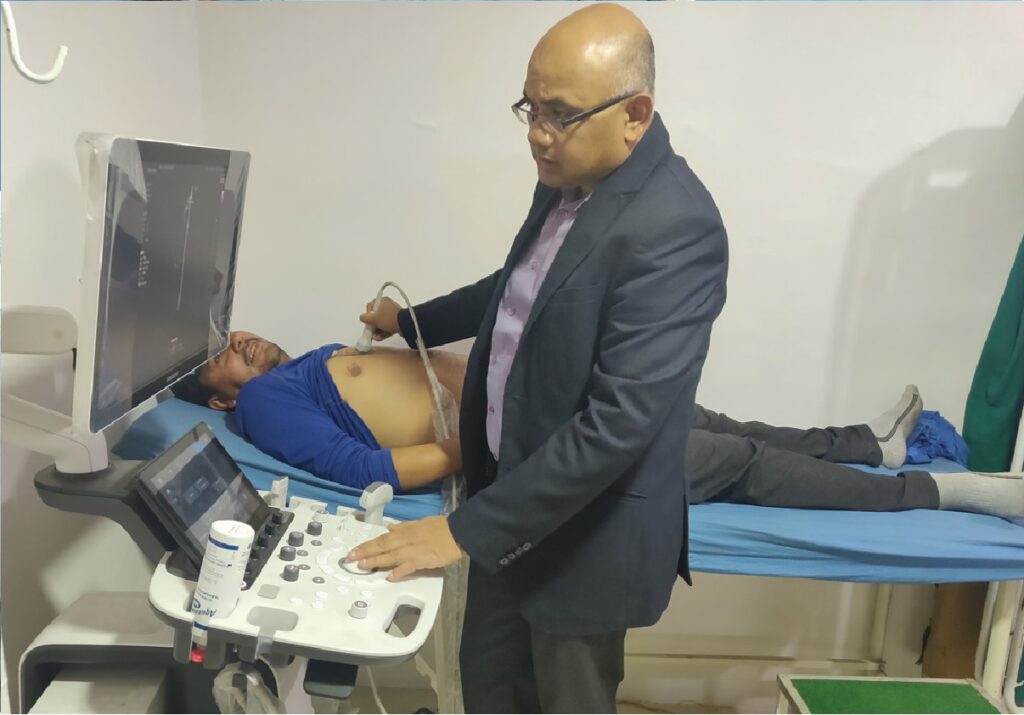
Interventional radiology (IR) uses image-guided procedures to diagnose and treat a wide range of medical conditions. Ultrasound (USG) is a common imaging modality used in IR procedures due to its ability to provide real-time images and its non-invasive nature.
Some of ultrasound guided interventional radiology procedures that is done at M.G. Polyclinic are:
1. Biopsies: Ultrasound-guided biopsies are used to obtain tissue samples from organs such as the liver, kidney, and prostate. The ultrasound is used to guide a needle to the site of interest and obtain a sample for analysis.
2. Drainage: Ultrasound-guided drainage is used to remove fluid from organs or abscesses, such as in cases of pleural effusions or ascites.
3. Vascular access: Ultrasound guidance is used to place central lines and peripherally inserted central catheters (PICC) in the veins, as well as arterial access for angiography or other procedures.
Interventional radiology procedures using ultrasound guidance are safe, effective, and minimally invasive, with shorter recovery times compared to traditional surgical procedures. They offer an alternative to open surgery for many conditions, allowing patients to benefit from less pain, reduced scarring, and a quicker return to normal activities.
Radiologists With Us:

Dr. Devraj Kandel
Consultant Radiologist
MBBS, MD in Radiology
NMC No: 16386
Bir Hospital (NAMS)

Dr. Sukriti Shrestha
Consultant Radiologist
MBBS, MD in Radiology & Radiodiagnosis
NMC No: 11639
HAMS Hospital